ardEEG
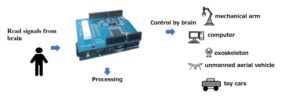
ardEEG is an open-source shield for the Arduino UNO R4 that measures biosignals — including EEG (electroencephalography), EMG (electromyography), and ECG (electrocardiography).
What It Does
ardEEG brings biosignal acquisition to the Arduino platform, making it the most accessible and lowest-cost entry point in the PiEEG device family. It connects directly to the Arduino UNO R4 header and uses the ADS1299 analog front-end chip to capture high-quality biosignal data. ardEEG is ideal for students, hobbyists, and educators who want to explore EEG, EMG, and ECG measurement without the complexity or cost of a single-board computer setup. It is also well suited for embedded BCI prototypes and low-power standalone applications.
Key Features:
- Supports EEG, EMG, and ECG measurements
- Connects directly to the Arduino UNO R4 header
- Powered by the ADS1299 analog front-end chip
- Compatible with dry and Ag/AgCl wet electrodes via 2.54 mm pin pitch connectors
- Low power — runs from a small 5V power bank (up to 1,000 mAh, max 1A)
How It Differs from PiEEG:
Comparison: PiEEG vs. ardEEG
| Feature | PiEEG | ardEEG |
|---|---|---|
| Host board | Raspberry Pi 4 / 5 | Arduino UNO R4 |
| Channels | 8 | 8 |
| Power requirement | 3A, up to 10,000 mAh | Max 1A, up to 1,000 mAh |
| Operating system | Raspberry Pi OS (Linux) | Arduino firmware |
| Best for | Research, full BCI setup | Education, prototyping, embedded |