Signals & Datasets
What real ardEEG recordings look like, and open data to practise with. All recordings were made at 250 samples per second.
Example signals
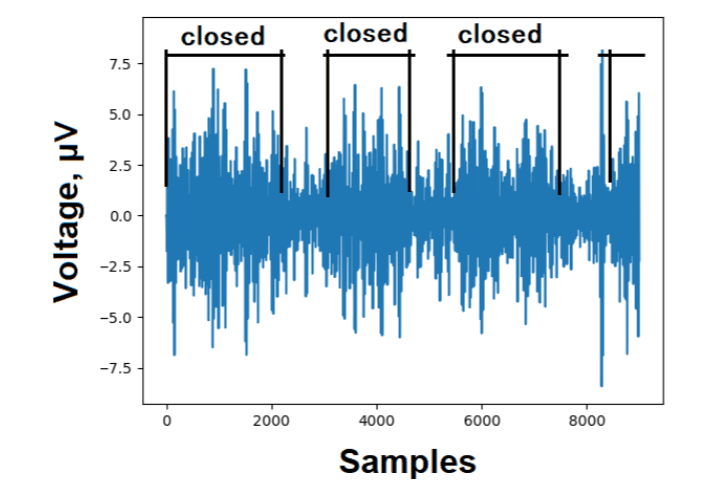
EEG: alpha test
Dry electrode at Fz, eyes closed and open in turn. The signal is filtered to 8–12 Hz, so the alpha rhythm shows as bigger waves in the "closed" periods.
EEG: chewing and blinking artifacts
Dry electrode at Fz. Chewing 4, 3, 2 and 1 times, then blinking 4, 3, 2 and 1 times. Filtered to 1–40 Hz. These large spikes come from muscles and eye movement, not the brain.
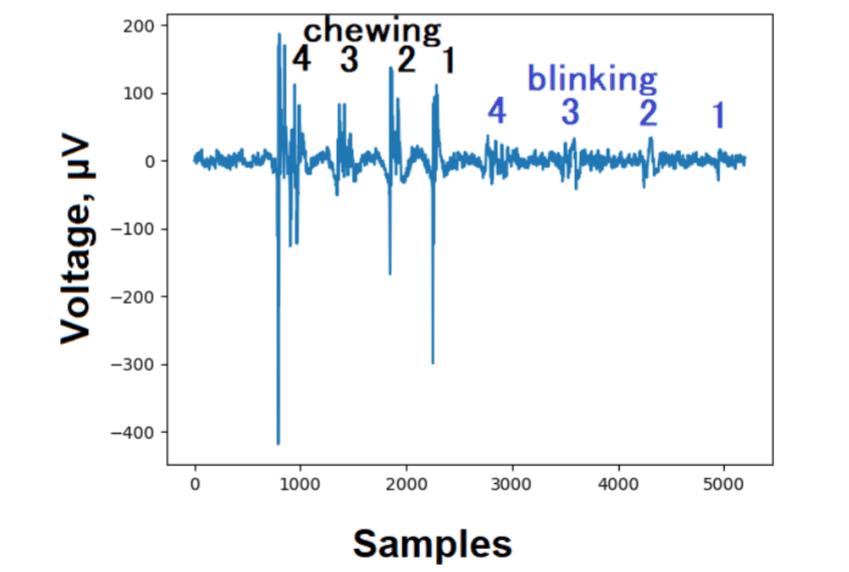
Learn to recognise artifacts before you analyse anything. Remove or mark them before computing band power or training a model.
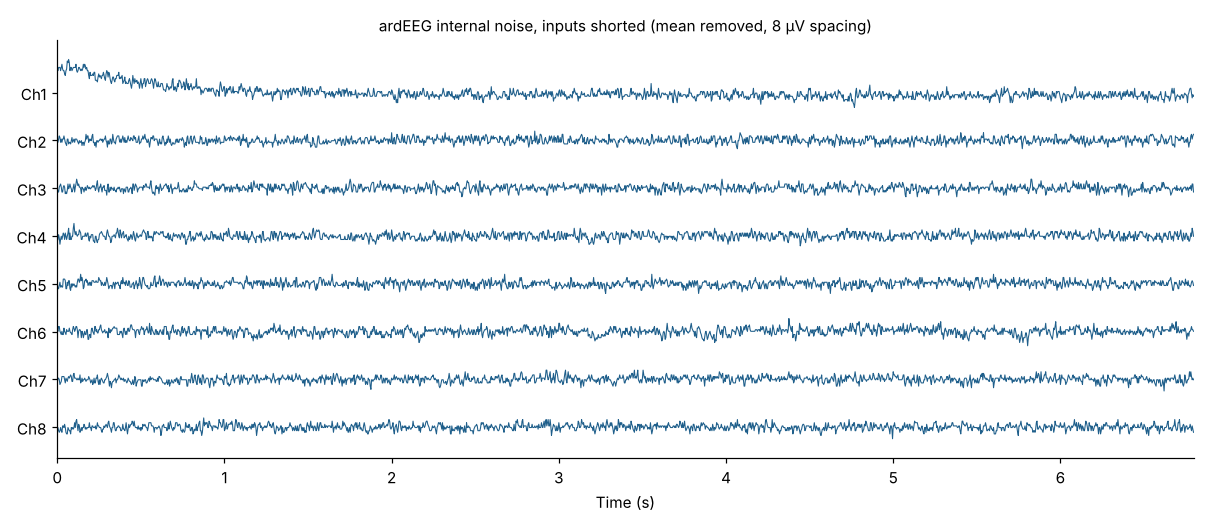
Internal noise
The board's own noise, with no person connected. Each channel stays within a few µV: about 0.5 µV RMS (3–4 µV peak-to-peak) on most channels once the signal has settled.
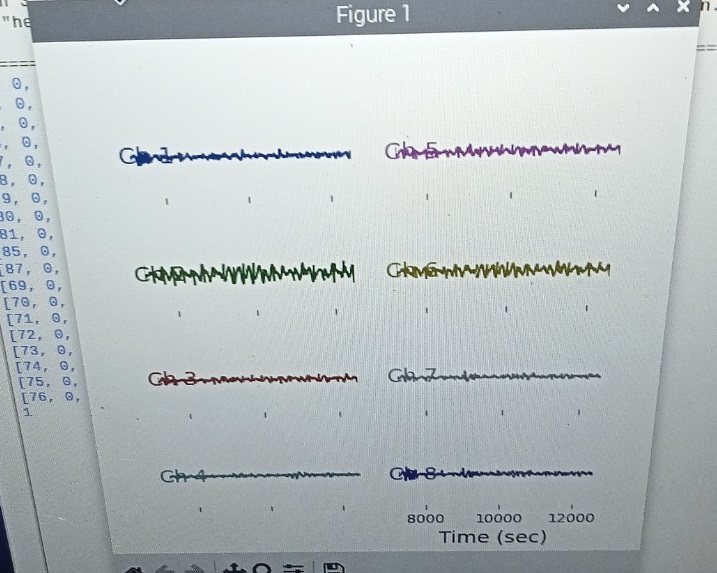
8 channels live
Datasets
In the dataset (opens in a new tab) folder of the ardEEG repository. Values in µV, 250 SPS.
| Folder | File | Content | Size |
|---|---|---|---|
alpha | Alpha.xlsx | Eyes closed and open, dry electrode at Fz | 1 channel, 8,998 samples (about 36 s) |
artefacts | artefacts.xlsx | Chewing and blinking 4-3-2-1 times, dry electrode at Fz | 1 channel, 5,199 samples (about 21 s) |
internal_noise | internal_noise.xlsx | Internal noise test | 8 channels, 1,700 samples (about 7 s) |
The alpha and artefacts folders each have a plot.py script that filters and plots the data.
Raw values carry a large DC offset (tens of thousands of µV for the electrode recordings). That is normal. Apply a band-pass filter before looking at EEG.
Projects
ardEEG leaves the Arduino's other pins free, so the same board that reads your brain can drive LEDs, motors or a buzzer, or talk to other devices. Ideas: an LED that lights when alpha rises, a toy car steered by blinks, or a robotic arm controlled by jaw clenches.